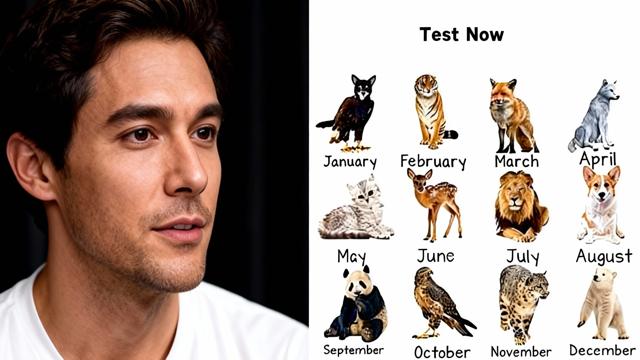
You finish a quiz, a label pops up, and within seconds your thumb is already hovering over the share button. That reflex is not vanity. Telling other people who you are, or who a playful test says you are, taps into some of the oldest wiring in the human brain.
Talking about yourself is its own reward
Researchers at Harvard once put people in a brain scanner and gave them a choice: answer questions about themselves or about someone else, sometimes for a small cash bonus. Participants often gave up money just for the chance to talk about their own opinions and traits. The study, published in the Proceedings of the National Academy of Sciences, found that self-disclosure lit up the same reward regions tied to food and money. In plain terms, sharing something true about yourself feels good the way a treat feels good.
A quiz result is a tidy shortcut to that reward. It hands you a ready-made caption, something like "apparently I'm the chaotic-good friend," that captures a slice of your identity without the awkwardness of announcing it out of nowhere.
Results are identity you can hold up
Psychologists describe a lot of everyday behavior as signaling: the small choices we make to show others what we value and where we belong. A shared result works as a low-effort signal. It says something about your sense of humor, your taste, or the group you would like to be counted in, and it invites people to nod along or push back.
Part of the appeal is that the label came from somewhere outside you. When a quiz names your type, it feels less like bragging and more like a discovery you are passing on. You get to claim the flattering parts and laugh off the rest, which makes the whole thing easy to post.
Sharing is really about connection
Most of the time, the point of posting a result is not the result. It is the reply. You send it hoping a friend answers with "this is SO you" or fires back their own screenshot so you can compare. That back-and-forth is the actual reward, and quizzes are built to spark it.
Surveys of online life from the Pew Research Center have long tracked how much of our social media time goes toward exactly this kind of light, expressive sharing: the memes, the reactions, the little "here is me" moments that keep a group chat alive. A quiz result slots neatly into that rhythm. It is short, visual, and practically begging for a response.
Why the good ones spread
Not every result travels. The ones that get forwarded tend to do a few things well. They flatter a little, so you feel seen rather than judged. They surprise a little, so there is something to react to. And they leave room for disagreement, because a friend insisting you are actually the other type is half the fun.
Emotion matters too. Content that makes people feel something, whether amused, proud, or mildly called out, moves further than content that leaves them flat. That is why a result written with a wink outperforms a dry paragraph of description. You are not just sharing a category; you are sharing a feeling and inviting others into it.
Enjoy the rush, keep it light
Knowing the mechanics does not spoil the fun. A quiz result is a small, safe way to say "here is a piece of me" and see who leans in. The satisfaction is real, the stakes are tiny, and the worst case is a friend teasing you about your answer.
So the next time a label pops up and your thumb twitches toward share, you can enjoy it for what it is: a quick hit of self-expression, a signal to your people, and an opening line for a conversation you actually want to have.